


Alex Kostadinov is the heart and soul of AustralianStakes and uses his vast iGaming experience to craft content that is both easy to understand and helps Australian players make better decisions before gambling. He personally writes or fact-checks all articles...
Read Full BioRoulette Basics: Table, Wheel, and Essential Gameplay Rules
At its core, roulette is a simple idea: players pick one or more numbers, place one or more bets, and a croupier spins the roulette wheel.
The setup includes a wheel with 37 (or 38 in double-zero variants) pockets coloured red and black, and a green pocket for the zero.
The table is divided into sections covering different number combinations, along with special sections for types of bets such as 1-18, Odd/Even, or 1st 12. If you guess the winning number correctly, you get paid according to the paytable.
There are also several different versions of roulette, from the classic European and French formats to modern variants that add extra features and betting options.
And as we explain in more detail in our roulette guide, it’s not just a single-number game. You can also predict whether the ball lands in a red or black pocket, whether the number is odd or even, and whether it is a column number or a corner number. There’s a variety of inside and outside bets that I’ll explain below, but that’s the gist of it.
You have zero control over where the ball lands, but you can control how you play and how much you wager, and use bonus features or special bets in versions where those options are available.
The Three Main Versions of Roulette
I’ll look at various modern online roulette versions shortly, but they all trace their roots back to the original roulette wheel. Over time, different variations developed, with European, French and American roulette becoming the three main versions you’ll come across today.
The differences between them may look small, but changes to the wheel, betting rules, and payouts can have a noticeable effect on the house edge and how you play. Let’s take a closer look at each version and see what makes them different.
European Roulette
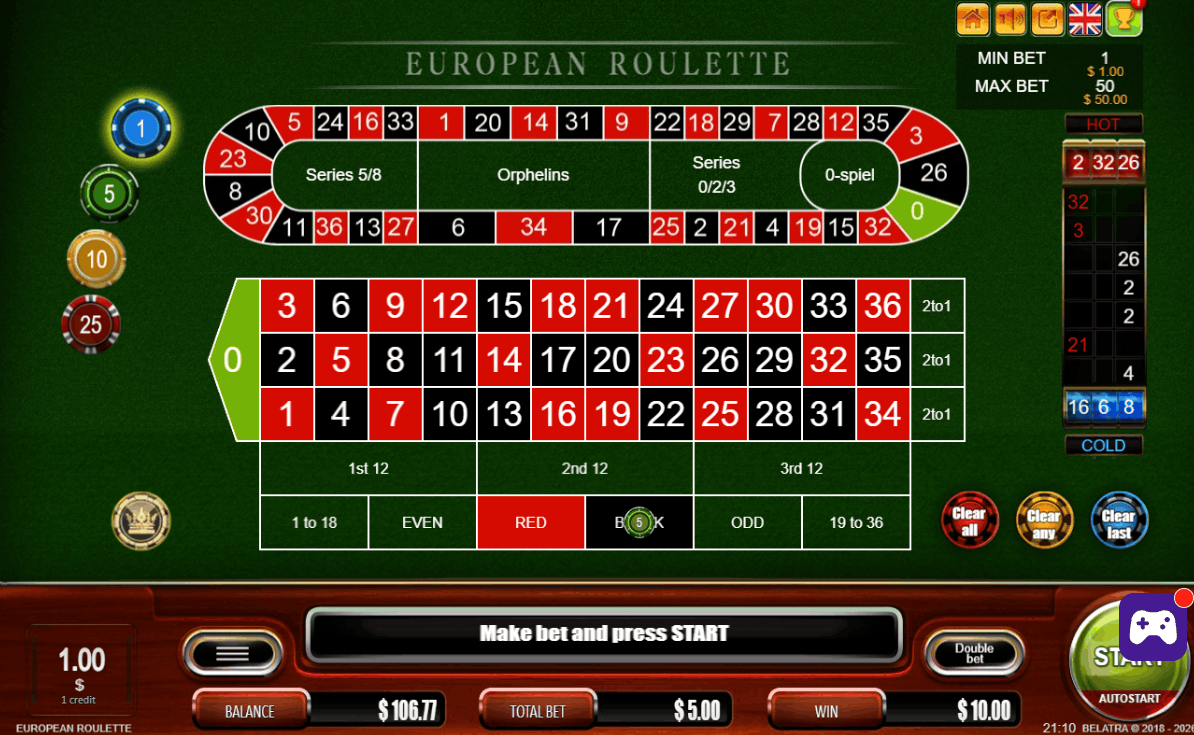
European roulette has become so popular that most new RNG and live roulette variants that you’ll find at top live casinos follow its format.
The rules are clear-cut, and there are no extra zeros or special rules for how the 0 (zero) pocket works, as in French roulette, which actually works against you. All outside bets will lose if the ball lands in the 0 pocket, while straight-up bets on 0 or on combinations that include 0 are paid out.
It’s worth noting that some tweaked versions of European roulette, like the ‘Hamburg’ version, will pay half your bet back when the ball lands on 0 for even-money bets: red/black, high/low, odd/even, which is similar to the La Partage rule.
The house edge of European roulette is 2.7%, with a 97.30% RTP, making it the golden standard of roulette when it comes to player odds. French roulette can offer even better odds, while American roulette has a much higher house edge of 5.26%, making it significantly less favourable for players.
French Roulette
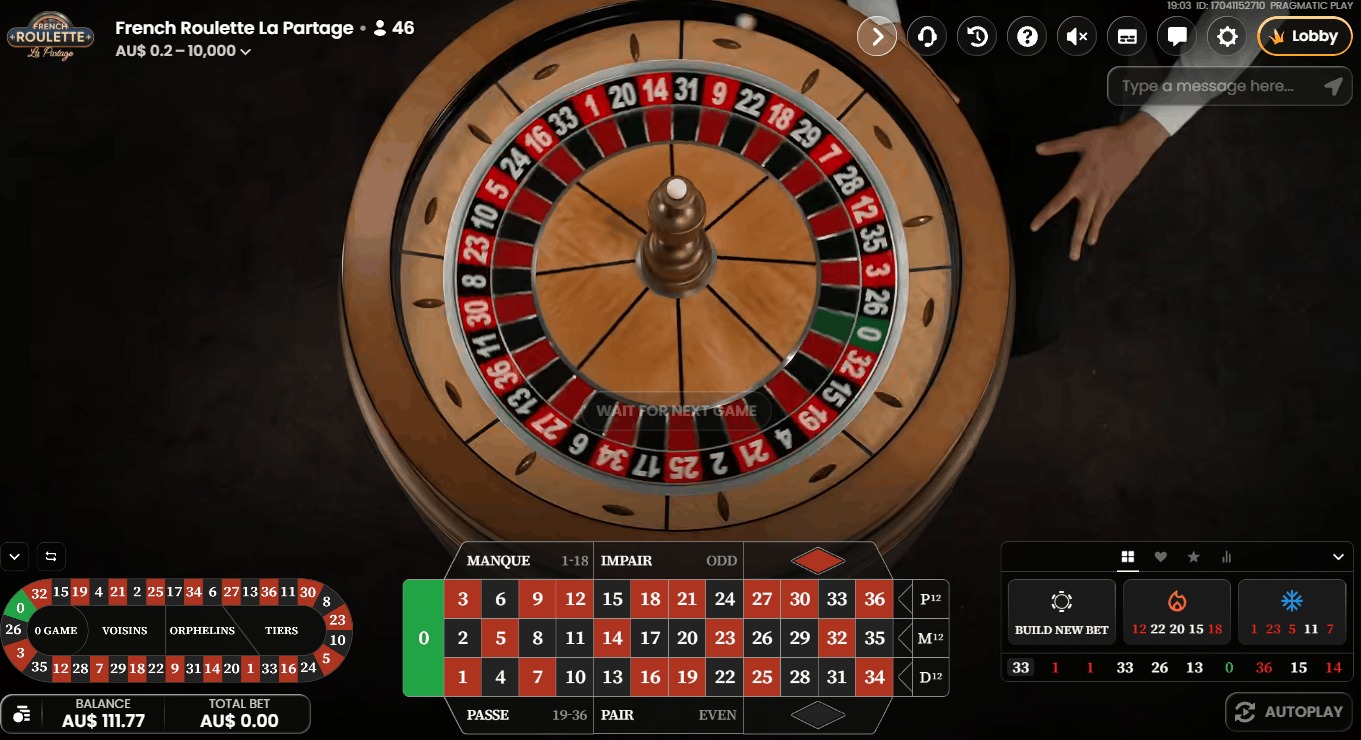
If you look at French and European Roulette side by side, they are almost identical. A wheel with 36 numbered red and black pockets, a green pocket for the 0, and all the standard inside and outside bets. The core difference is the way the 0 works in French roulette, which follows one of two rules: La Partage or En Prison.
With these rules in place, the game delivers a more favourable house edge for even-money bets than European or American Roulette, with an RTP of 98.65% compared to 97.30% in European and 94.74% in American.
There’s nothing complicated about how these rules work and, in fact, they work to your advantage on a losing bet:
- La partage: By far the more common of the two, the La partage rule pays half of your wager back on even-money bets like red/black, odd/even, or high/low if your bet loses because it lands in the 0 pocket. This rule offers better odds for 0 than the European version.
- En prison: It translates to ‘imprison,’ and that’s exactly how this rule works. If it lands on 0 on even-money bets, it ‘imprisons’ your bet, so you neither win nor lose. If you win the same bet on the next spin, you get your money back. If the next spin loses, you lose your stake.
American Roulette
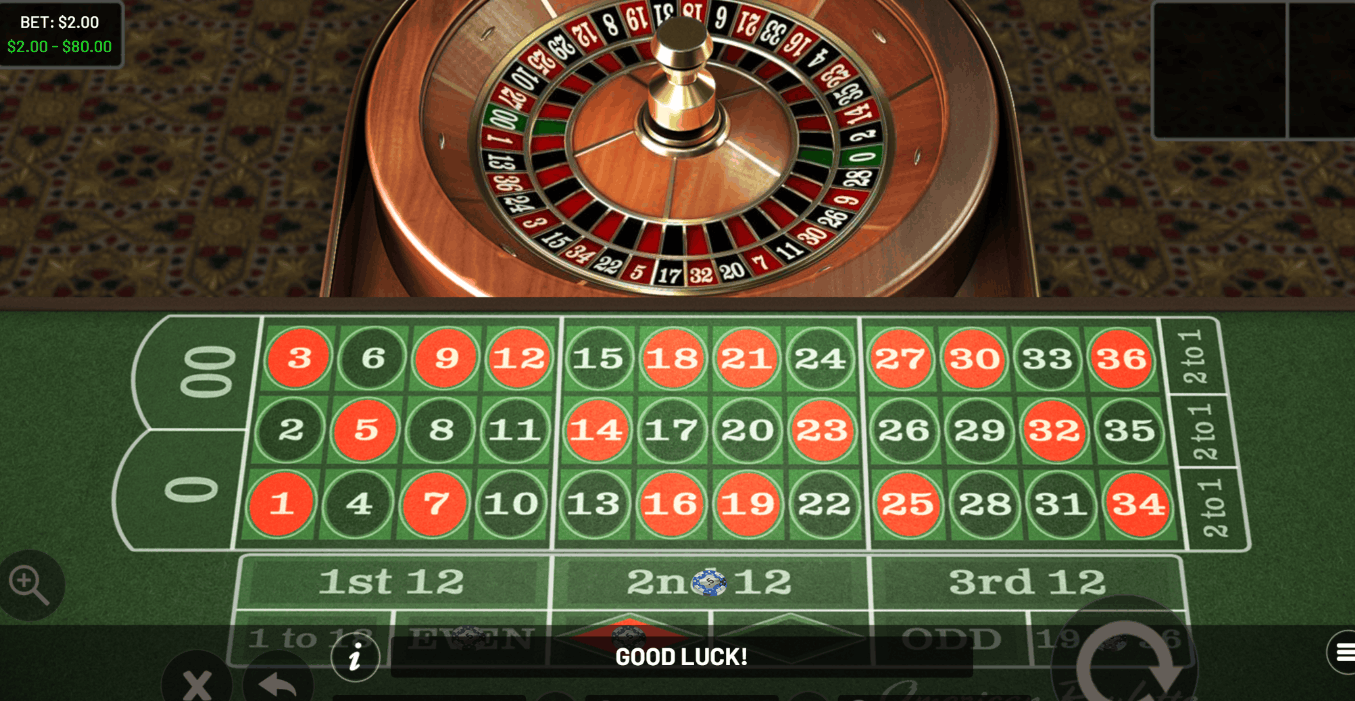
American Roulette is essentially an American variation of the original European version that adds an extra 00 pocket to the standard wheel. That double-zero format directly affects the game’s mechanics, increasing the house edge to 5.26%, which, as I explain in my house edge guide, is much worse than the European and French variants.
With the extra pocket, the probability of winning even-money bets is 47.37%, a seemingly small but important drop in probability from the 48.65% in French and European roulette.
Another thing that makes American Roulette different from these two is the addition of the ‘First Five Bet’, otherwise known as the Basket Bet, which covers the first five numbers: 0, 00, 1, 2, and 3, pays 6:1, and is exclusive to American Roulette. The downside is that it further pushes the house advantage (7.89%) and reduces RTP value.
Other Online Roulette Variants
With the rise of online gambling, roulette has changed in visual style, betting options, pace, and features. Most online versions, like Speed Roulette or Auto Roulette, are based on the European version, but French and American roulette offer their own variations, with both live dealers and automated (RNG) gameplay.

Speed Roulette is just as it sounds: a faster, more dynamic game that reduces the wait time between bets. It adheres to the rules for European roulette, with a single 0 pocket and 36 red and black numbers.
Instead of the standard 20- to 30-second wait, Speed Roulette reduces the wait time by around half, with 13 seconds typically between bets. This is ideal for fast-paced gamblers, but not so much for analytical players who use roulette betting systems, who typically need a bit more time to decide their bet.
Another important rule here is the ‘valid spin rule,’ which decides if the spin is valid. Unlike most roulette versions, where you bet before the ball is dropped and the wheel spun, in Speed Roulette you can bet as the ball spins, but it must complete at least three revolutions on the wheel from the point it started.
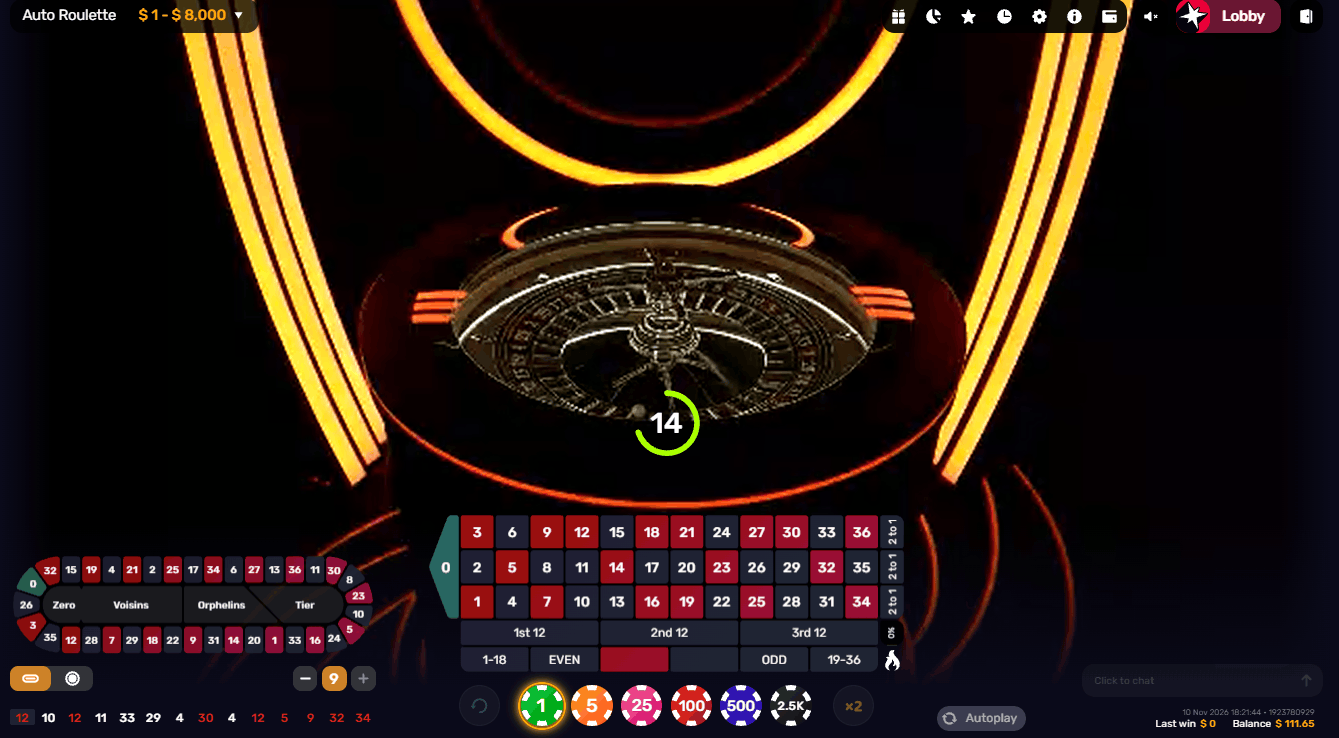
This faster-paced adaptation of the classic roulette table and wheel is usually offered in RNG format, without a live croupier. The wheel spins each round automatically, so there’s less time between wagers.
Aside from the automatic spins, everything else is just like European roulette, including the payouts, house edge, and bet types.
Popular software developers such as Pragmatic Play, ICONIC21, Imagine Live, and Winfinity have introduced a range of Auto Roulette variations. Top roulette casinos in Australia also offer hybrid versions that bring in features from other variants, including Gravity Auto Roulette, Speed Auto Roulette, Multiplier Auto Roulette, and VIP Auto Roulette.

Gravity Roulette is more or less an adaptation of Evolution Gaming’s original Lightning Roulette, introducing multipliers on select numbers that can randomly boost payouts.
The game assigns multiplier values from 50x to 1,000x every round on 1 to 5 random numbers. The bonus game round is another highlight, with at least one multiplier worth at least 500x.
But someone’s gotta cover the multiplier payouts, and it’s not going to be the house. Those boosted multiplier wins come at a cost: reduced payouts for straight-up, split, street, corner, and line bets. So, essentially, while multipliers do offer the benefit of single random boosts, it offsets that benefit by cutting payouts on standard inside bets.

Quantum Roulette is a cross between classic European roulette and a live show, and you can play it at some of our popular Australian online casinos that offer Playtech games. The layout is the same as in European roulette: a 37-pocket wheel and a table with the usual inside and outside bets.
The game pace is similar to Speed Roulette, in that the betting time is reduced to about 13-14 seconds per round, offering faster gameplay than most standard variants. Another highlight is the Quantum Multipliers, which offer 50x to 500x boosts that appear randomly every round only on straight-up bets.
There are two more ‘Quantum’ features that can boost wins: Quantum Boost and Quantum Leap. The first one adds a 50x multiplier boost to existing multipliers, while Quantum Leap offers even bigger multiplier boosts, up to 500x.
These multipliers won’t affect the house edge, but will directly impact the payouts on non-multiplier straight-up bets by reducing their odds compared to standard roulette games.

This is a personal choice because Gates of Olympus Roulette is one of my favourite online adaptations of the game and is unique among roulette games. It involves elements of roulette, pokies, and a game show, so it’s more like three games in one.
The wheel is based on the standard European, 37-pocket format, but the in-game multipliers are an addition to the original. Each hand, the game randomly chooses between 2 and 7 numbers with multiplier values from 50x to 250x for straight-up bets on those numbers.
But other roulette versions, like Lightning Roulette, also have multipliers, so what makes this one different? Well, in addition to the regular multipliers, the game also has a special Bonus Round. It introduces a huge 5×6 pokie grid based on Pragmatic Play’s own Gates of Olympus right there in the live studio.
Only a single bonus number is chosen for the Bonus Round, and the multiplier can reach up to 2,500x across 15 free spins. This interactive segment plays out like a live game show, hosted in real time by the dealer.
The game has a standard house edge of 2.7% and the usual paytable, with one notable difference: the payout for straight-up bets is reduced to 20:1, down from 35:1 or even 29:1 in most versions, to offset those huge multiplier payouts.
Live and RNG Roulette: A Quick Comparison
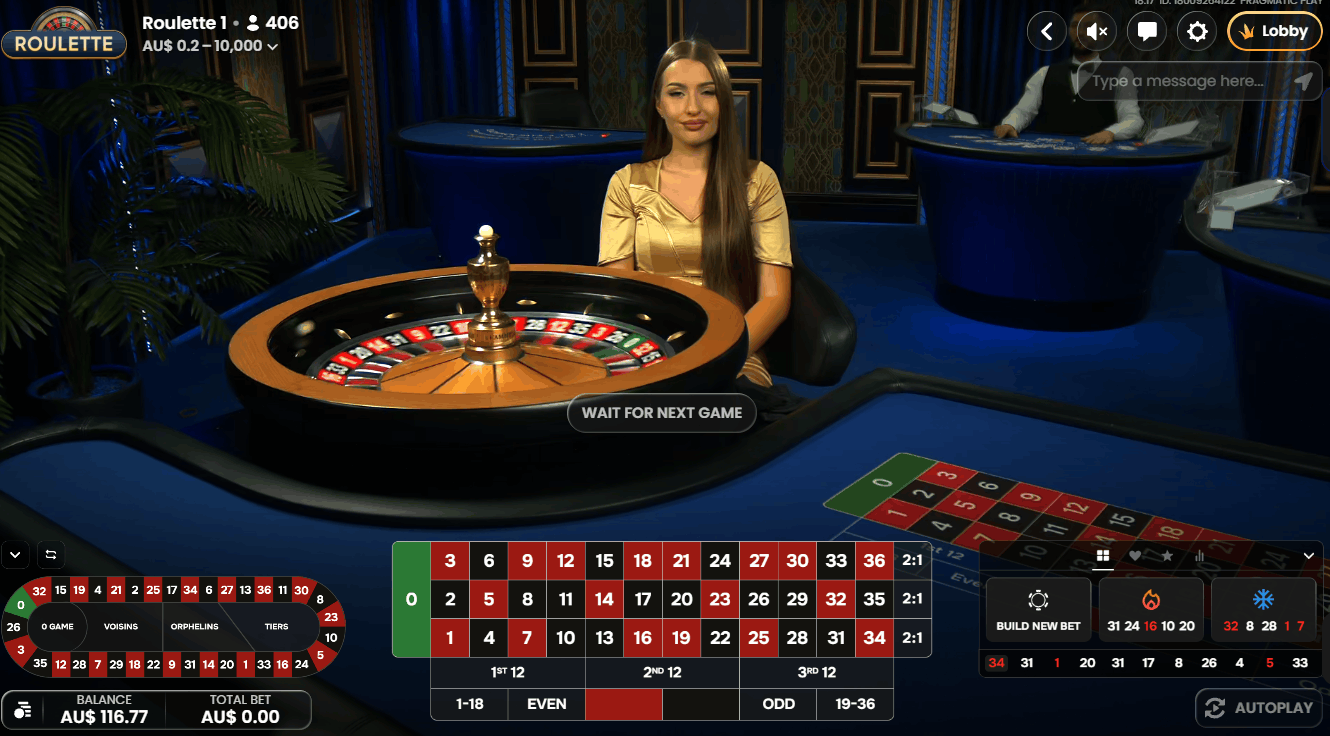
Roulette is available in two main formats: virtual (RNG) and live dealer. With RNG roulette, the table and wheel are completely digital, relying on random number generator software to determine outcomes, making every spin entirely computer-driven.
In contrast, live roulette provides real-time streams of real human dealers operating physical wheels from dedicated studios. Although live games play out a bit more slowly because they use an actual wheel, they offer a more authentic atmosphere that mimics the in-person experience.
Both live and RNG roulette come in various subcategories, including Speed Roulette and Auto Roulette, as well as the three staple versions: European, French, and American Roulette.
Roulette is a game of luck, but you are still in control of your bets, and there are several roulette strategies for effectively managing your budget. The thing is, every strategy needs to be tested, and testing it with real money in live games, which don’t offer demo play, isn’t very cost-effective.
On the other hand, RNG roulette is perfect for this purpose. Most casinos offer demo play on an automated roulette table, which mirrors the real thing except with no risk as you play with virtual funds.
The Types of Bets in Roulette: A Breakdown
If you play roulette long enough, you can learn the standard paytable by memory – it’s that easy to understand. However, RTP, house edge, and payouts, especially for inside bets, can vary from one version of the game to the next.
Outside Bets
These are the simpler bets, offering a higher probability of winning due to covering number clusters, colours, or types of numbers. Here’s a quick look at the standard outside bets:
- Even-chance bets: Betting on odd or even numbers, red or black pocket, or low or high numbers offers the same payout rate of 1:1, i.e. even-money payouts with around 50% probability of hitting, specifically 48.65% in European versions and 47.37% on American roulette.
- Column bets: The table is split into three horizontal columns covering 12 numbers each. Betting on each column represents a ‘column’ bet, and you can place this type of bet by placing your chips in the ‘2:1’ section of the table, which is at the rightmost side of each column.
- Dozens: The table has three blocks with 12 numbers each, representing the ‘dozens’ bets. You can bet on the 1st, 2nd, or 3rd 12 numbers; the 0 is excluded from each dozen.
Inside Bets
Inside bets offer the exact same house edge as outside bets, but with significantly bigger odds and lower hit probabilities. Here are the inside bets you’ll find in most standard roulette games:
- Straight Up Bets: Straight-up bets include wagering on any single number on the wheel, including the 0. They offer the longest odds, usually 35:1, or 29:1 in special versions that provide multipliers.
- Split bets: Place your chips on the line that splits two numbers, say 15/18 or 13/16, and you’ve made a split bet. If the ball lands on either number, you win a generous 17:1 payout.
- Street bets: This is a three-number bet covering three numbers in a row. You need to place your chip(s) on the outside line of the table covering the three numbers, and if you win, the standard payout for a street bet is 11:1.
- Corner bets: This bet covers four numbers and pays 8:1 in a standard roulette paytable. To make a corner bet, just place your chips on the intersection of any four numbers.
- Six-line bet: It covers six numbers in two vertical rows, for instance, 22, 23, 24, 25, 26, and 27. You need to place your chips on the outside line where the two rows meet.
- First Five Bet: This is an exclusive bet available only in American roulette versions, and covers the first five numbers, including the double-zero: 0, 00, 1, 2, and 3. This bet drastically changes the game’s house edge, increasing it from an already high 5.26% to 7.89%.
Roulette RTP, House Edge, Payouts, and Win Probability
Ideally, you’d want the version with the lowest house edge, i.e. the highest RTP, but some games offer a less favourable edge for players. The RTP for different bets depends entirely on the version of the game you’re playing, so let’s quickly go over the specifics.
In general, a standard European wheel has a house edge of 2.7%. That’s the casino’s advantage, and as far as value goes, a 2.7% house edge, which is 97.30% RTP. As you’ll read in my RTP guide, it’s a perfectly fine, acceptable rate.
American Roulette is unique in having a higher house edge of 5.26% and an RTP of 94.74%, which is no small difference compared to European and French games.
As for French Roulette, it offers the most favourable house edge of the three games. Thanks to the La Partage and En Prison rules for the 0 pocket, the RTP rises to 98.65% (house edge drops to 1.35%) when the ball lands in the 0 pocket on even-money bets like odd/even, high/low, or red/black, but it has become notoriously hard to find.
The emergence of a whole clutter of sub-categories like Quantum Roulette, Lightning Roulette, Multiplier Roulette, and even a multi-ball variant has changed the payout rates on certain bets. However, it’s not necessarily for the worse.
Some games, like Gravity Roulette, reduce the house edge to 2.53% (RTP of 97.41%) on bonus numbers and for inside bets. Outside bets remain at the standard 2.7% mark. Here’s what else can affect the RTP.
- Number of 0 pockets: The math is simple: more zeros increase the house edge, as is best exemplified by American Roulette. The double-zero wheel in the American version bumps the overall theoretical house edge to 5.26%, and up to 7.89% for the ‘special’ ‘first five bet.’
- Rules for the 0: This mainly refers to the French Roulette’s La Partage and En Prison rules, which cut the house edge in half from 2.70% to 1.35%, making it the best form of roulette RTP-wise.
- Non-standard payout tables: As I said earlier, roulette variants that offer multiplier boosts are tempting, until you realise the payouts for inside bets are much lower. For example, in Lightning Roulette, the 29:1 payout on straight-up bets slightly reduces the RTP to 97.1%, compared to the standard 97.3%.
- Specific bets: Almost any new or special bet that reduces the payout relative to the standard paytable, as in the example above, will also increase the house edge, which you want to avoid in roulette. Another example is the ‘five number bet’ in American roulette, which slashes the RTP value to 92.11%, providing a house edge of 7.89%, which is outrageously high by classic roulette standards.
The standard roulette paytable follows strict payout rules governing inside and outside bets.
With the emergence of modern online roulette games, providers have introduced a set of small modifications that directly affect the standard payouts, typically reducing them to cover for special bonus features.
For our purposes, we’ll look at the payouts and RTP of the European and American formats of the game, where the double zero directly affects the win probability.
If you decide to play a different variant, we strongly advise inspecting the paytable and RTP to see how changes to the game impact the payouts.
| Bet type | Payout | Win probability |
|---|---|---|
| Straight-up | 35:1 (29:1 in some versions) | 2.70% (2.63% in American) |
| Split | 17:1 | 5.41% (5.26% in American) |
| Street | 11:1 | 8.11% (7.89% in American) |
| Corner | 8:1 | 10.81% (10.53% in American) |
| Line | 5:1 | 16.22% (15.79% in American) |
| Dozen/column | 2:1 | 32.43% (31.58% in American) |
| Red/black, odd/even, high/low | 1:1 | 48.65% (47.37% in American) |
Can I Use Strategy to Win in Roulette?
You can explore roulette betting systems, like progressive and non-progressive systems, but let’s be real: roulette is, in essence, a game of luck.
You can never control the pocket in which the ball lands; only how you bet, and there are actually several effective roulette bankroll strategies you can test out for managing your limits.
- Progressive betting: Progressive strategy means increasing your bet size every hand based on whether you won your last bet. The idea is to place a slightly bigger bet on every lost hand. It’s risky and requires a big budget, but you can recoup some or most of your losses with just one or two winning hands. The Martingale system is one example of a progressive betting strategy in roulette.
- Non-progressive betting: This approach involves placing a flat bet on every hand, win or lose. Instead of increasing your bet size, you stay the course with a single bet unit. This can be quite advantageous for low-budget, casual players. Betting flat on even-money bets is a less risky way to manage your budget over long gambling sessions. Some systems, like the 24+8, cover two of the three dozens and add 8 individual straight-up bets on numbers of your choice, covering a total of 32 of the 37 numbers with an almost 86.5% win probability.
Last Thoughts: Which Roulette Game is Right for You?
Which roulette wheel suits you depends on your budget and how you want to manage risk.
Most online versions are adaptations of European roulette, which provides a simple paytable and standard bets and payouts.
On the other hand, French roulette offers a lower house edge on even-money bets when the ball lands in the 0 pocket, giving players a greater advantage. This may make it the best of the three classic variants when played in its original form, with no modern tweaks, but good luck finding such a variant.
Then there’s the American Roulette wheel with an extra double-zero pocket, which changes the entire math behind the payouts, but to the casino’s advantage. Sure, it adds a special ‘first five bet,’ but it’s the worst bet in the entire game and pushes the house edge even higher.
Some modern versions based on the European wheel, such as Lightning Roulette or Gates of Olympus Roulette, can trigger huge multiplier payouts, but usually compensate by reducing the payouts on straight-up and other inside bets.
Latest Articles


Gambling is intended only for adults aged 18 and over. AustralianStakes.com is committed to producing fair, independent content, and our editorial opinions are not shaped by casino operators, advertisers, or other outside parties.
Gambling should always be treated as entertainment and contained within sensible limits. Anyone concerned about their own gambling habits or those of a friend or family member can access confidential support through the following organisations:
- https://responsiblewagering.com.au/
- https://www.gamblinghelponline.org.au/
- https://gamblershelp.com.au/get-help/