


A testing note: I’ll focus mainly on Texas Hold’em, since it’s by far the most popular tournament format, but much of the strategy applies to other poker variants too.
What Are Poker Tournaments?
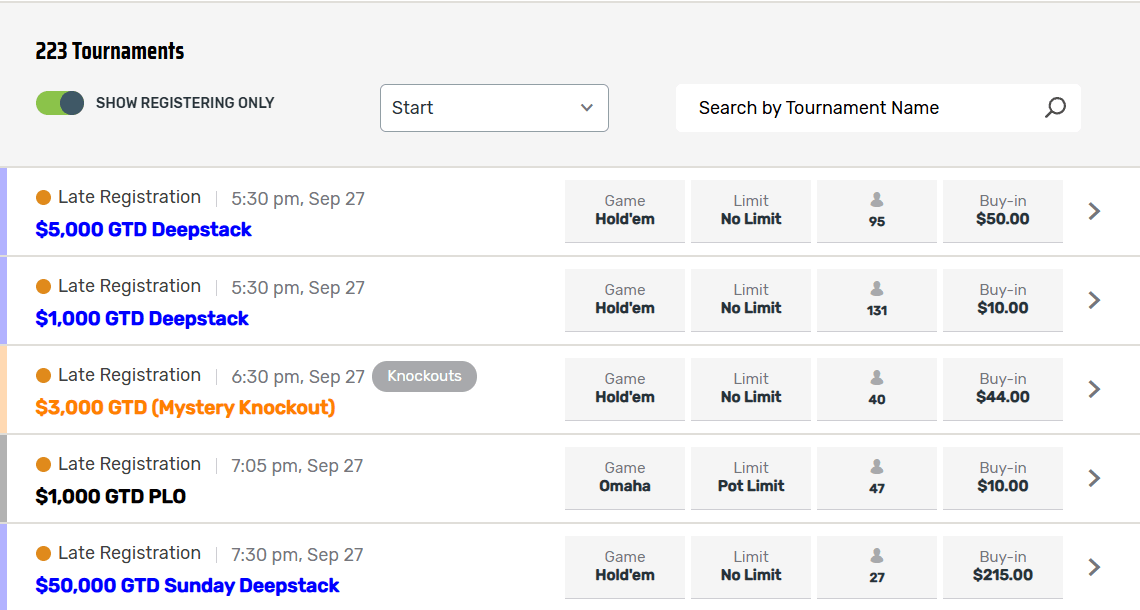
Before getting into the strategy, I’d like to explain what actually makes tournament poker different.
At first glance, it looks just like any other Texas Hold’em game, and the rules of the game are the same. You get your two hole cards, the community cards come out, and you’re trying to win chips from the other players. The most notable difference is what happens to those chips and how the game progresses.
In a tournament, you pay a set buy-in (or enter a freeroll tournament for free) and receive a predetermined number of chips. You then play until you either run out of chips or finish in a position that earns a share of the prize pool. Unlike a poker cash game, you can’t simply buy more chips when you lose your stack (unless you’re playing a rebuy or re-entry tournament).
Here, it’s important to remember that the value of your chips changes throughout the tournament. The other major difference is that the blinds increase as the tournament progresses, so you can’t always sit back and protect your stack.
If you keep folding while the blinds rise, you’ll eventually find yourself with fewer and fewer big blinds and less room to make moves.
Most tournaments follow a fairly simple structure. Everyone starts with a stack, the blinds begin at a predetermined level, and those blinds increase at set intervals. Players are eliminated when they lose all their chips, and the remaining players continue until there’s one person left.
The prize pool is then distributed according to the finishing positions. You don’t necessarily need to win the tournament to make money, but the biggest payouts are paid out to those who make it deepest.
There are several poker tournament formats you’ll come across, too:
- Freezeouts: You get one shot at the tournament. Once you lose all your chips, you’re out.
- Rebuys and re-entries: You can get back into the tournament under certain conditions after losing your stack with a so-called ‘re-buy’, but usually that’s only possible until a certain point.
- Turbo and hyper-turbo tournaments: The blinds increase much faster, so you need to be more aggressive and look for more opportunities to build your stack.
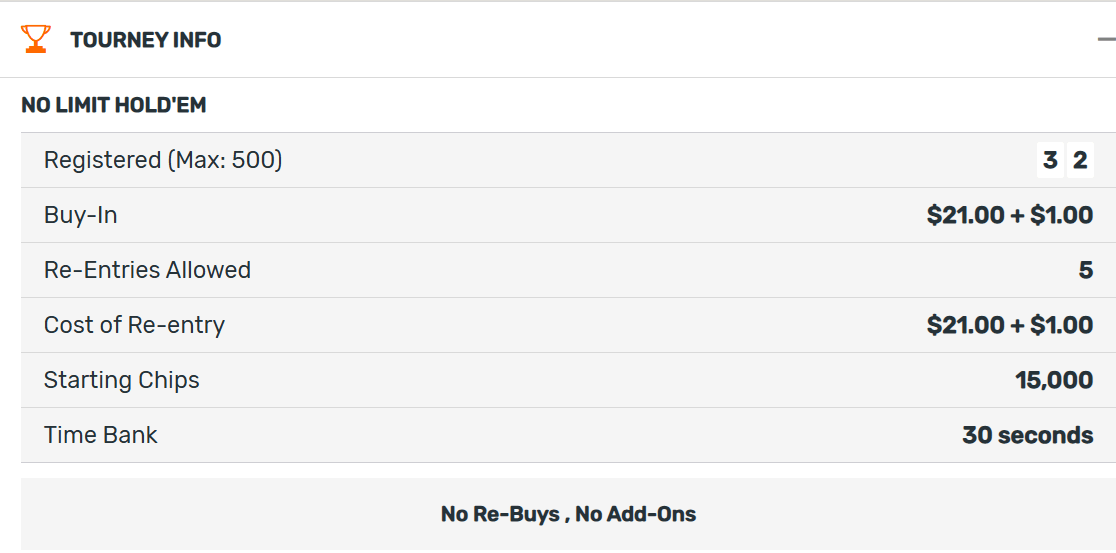
- Alex’s Tip: If you’re new to tournament poker, I’d stick to standard freezeout tournaments for now. Avoid turbo and hyper-turbo formats, as the faster blind increases make them much more aggressive. I’d also skip rebuy tournaments until you have more experience.
In a cash game, losing A$100 worth of chips means you’ve lost A$100. You can always leave the table or buy back in whenever you want to, and A$1 is equal to A$1 worth of chips.
Tournament chips don’t have a fixed value, and protecting your stack can become more important as you get closer to the money or a major payout jump.
Depending on the timing, type of tournament, and your position and stack, you sometimes need to be more protective of your chips, but sometimes you need to be more aggressive than you would in cash games.
In the rest of this guide, I’ll explain how to adjust your strategy as the tournament develops.
Poker Tournament Strategy: How to Approach Each Stage
Your strategy should change as the tournament progresses. The way you should play the first few levels is very different from how you approach the bubble or a final table, so let’s go through each stage and how you should approach them.
Early Tournament Strategy
In the early stages, you’ll usually have plenty of chips compared to the blinds, giving you more room to pick your spots. The main goal here is to play solid poker, avoid unnecessary risks, and take advantage when weaker players make mistakes.
As I’ve explained in my poker guide, patience is key in this game, and that’s especially true for the early stages of poker tournaments.
Be prepared for the early stages to look very different depending on the tournament. In a regular freezeout, experienced players may be fairly cautious, while a freeroll can be absolute chaos, with plenty of early all-ins.
Remember that you don’t need to match that aggression. You have plenty of time, so I’d focus on playing strong hands, picking good spots and letting overly aggressive players make mistakes and eliminate themselves. At the same time, don’t become so passive that you miss good opportunities to build your stack.
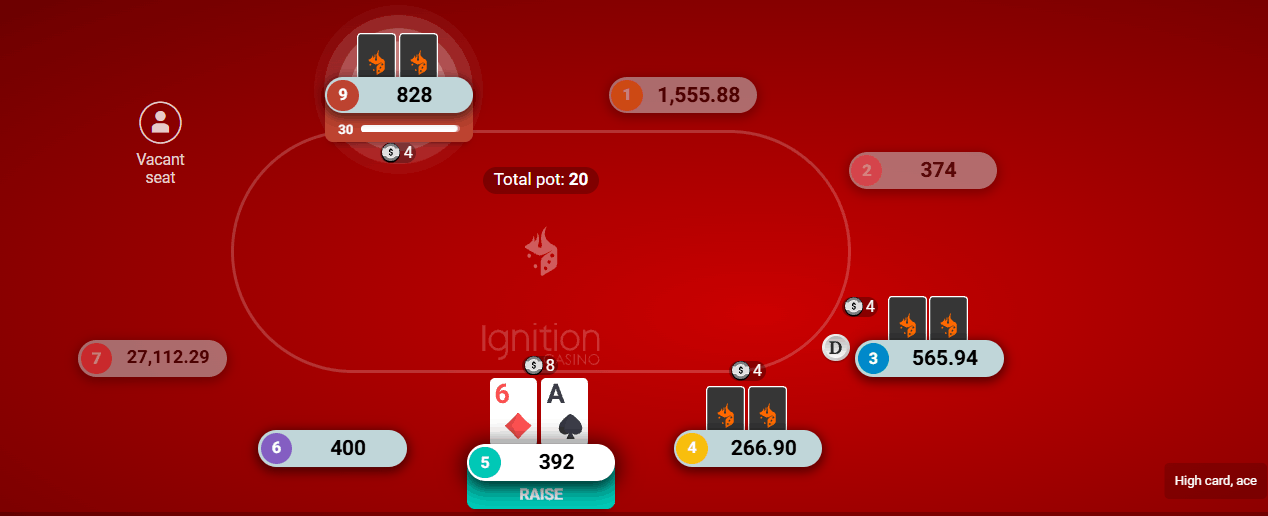
The position at the table is important in the early stages because you can somewhat anticipate the situation, so try to use it to your advantage and feel free to be aggressive when the position allows it, like in the screenshot shown above.
Alex’s Tip: Unfortunately, you can prepare as much as you want and still get knocked out in the early stages by someone who decides to shove all-in with a 6 and a J. Don’t sweat it. Bad beats are part of tournament poker, so take it on the chin, move on and play the next one.
Middle Stage Strategy
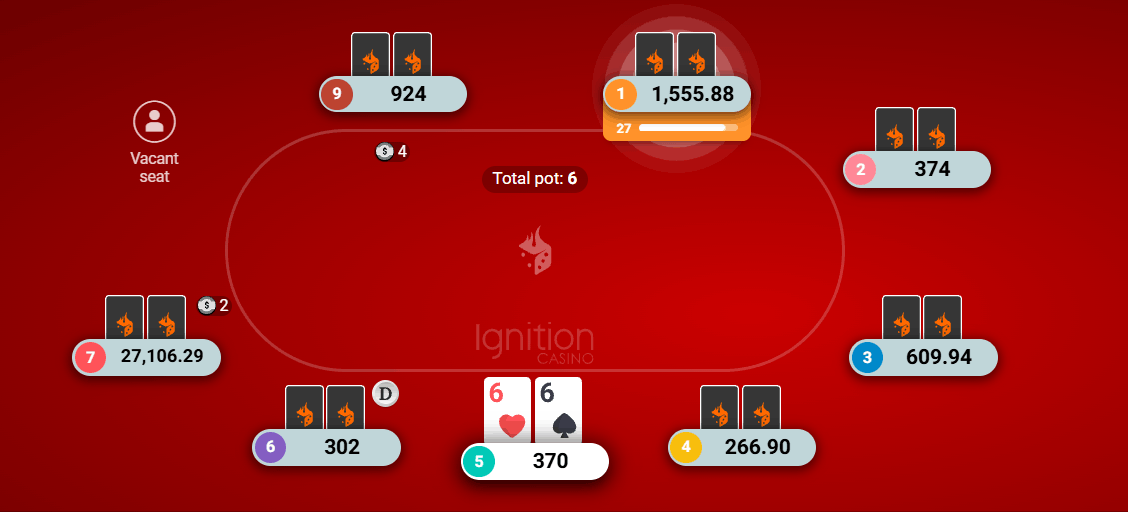
There’s no clear rule about when the middle stage starts, but you’ll notice. Many players are already eliminated, and you already have a decent stack. Now, this is where you need to be aggressive. The blinds are getting bigger, stacks are getting shorter in terms of big blinds, and you can’t afford to sit around waiting for premium hands.
This is a good time to start stealing more blinds, especially from late position, and putting pressure on players who are trying to protect their stacks. Depending on your position and stack, you should use aggression and start reading players. Pay attention to who is folding too often, who is opening too wide, and which players have enough chips to fight back.
You also need to start thinking more about your stack relative to the rest of the table. Having 50 big blinds when everyone else has 20 is a very different situation from having 20 big blinds when the table average is 50. If you’re the short stack, you should only play from LP, and you’ll probably have to go all-in at some point.
Approaching the Money: Bubble Strategy
The bubble is the point where things can get really interesting. You’re close to the money, but you’re not there yet, so you’ll often see players who were happy to take risks earlier suddenly become much more cautious because they don’t want to bust before the payouts start.
And that’s the correct strategy. This is the late stage of the tournament, so your goal is to reach the money.
This is where stack sizes become extremely important. If you have a big stack, you can put pressure on players who are trying to survive, particularly medium stacks that don’t want to take a big hit. If you’re short-stacked, though, you’ll need to find good spots to pick up chips and stay alive. You only have one ‘weapon’ at this point: shoving all-in, so use it wisely.
In-the-Money Strategy
Once you’re in the money, the pressure of busting without a payout is gone, so you can get a breather. However, you still want to look for good spots and pay attention to the payout jumps, especially as you get closer to the final table.
You’ll also notice that some players loosen up after securing a payout, while others become even more focused on climbing the prize ladder. Both strategies are valid, and neither is necessarily better.
I like to keep applying pressure when the situation allows it, but avoid taking unnecessary risks when a significant jump in prize money is coming up.
Final Table Strategy
At the final table, you should start looking much more closely at who is willing to risk their tournament life and who isn’t. A medium stack might fold hands they would happily play earlier because losing a big pot could cost them several places in the payouts, while a big stack can use that hesitation to steal more pots.
If you have a big stack, look for opportunities to put pressure on medium stacks without getting carried away. If you’re the short stack, you can’t wait forever for aces or kings either, because the blinds will keep coming. Pick your spots, but be willing to make a move when you have a reasonable chance to build your stack.
Table Position in Poker Tournaments
Your position at the table has a huge impact on which hands you should play and how aggressively you can play them. There are essentially three positions you can be at a poker table:
- EP (Early Position): The first players to act after the blinds.
- MP (Middle Position): The players sitting between early and late position.
- LP (Late Position): The players closest to the button, including the Cutoff and Button.
The earlier you have to act, the more careful you generally need to be, while being one of the last players to act gives you more information and more opportunities to put pressure on your opponents.
Early Position
When you’re in an early position, several players still have to act after you, so there’s a bigger chance someone has a strong hand. Keep your starting range tighter here, particularly in the early stages of a tournament.
Strong hands like big pairs and strong Broadway cards are playable, but if it’s the early stages of the tournament, chances are that someone after you will shove all-in and you’ll have to follow.
Middle Position
The middle position gives you a little more freedom. There are fewer players left to act behind you, so you can start opening your range slightly, especially if the players behind you are playing cautiously. Still, don’t treat middle position like late position, because there are enough players behind you to punish so-called ‘loose raises’.
Now, middle position with a big stack can be a powerful tool in the latter stages of the tournament, but I wouldn’t be too aggressive in the early stages.
Late Position
Late position is where you can really start taking advantage of your position. With fewer players left to act, you can play a wider range of hands and steal the blinds more often, particularly if the players behind you have been folding frequently.
The button is the best position at the table because you get to act last after the flop, giving you the most information before making your decision.
Stack Sizes in Poker Tournaments
Your stack size is just as important as your position and the stage of the tournament. I generally think about my stack in big blinds rather than the actual number of chips, because 20,000 chips can be a huge stack early on and a very short stack later in the same tournament.
For example, if the blinds are 50/100, a 20,000-chip stack gives you 200 big blinds. But if the big blind has increased to 2,000, those same 20,000 chips are only worth 10 big blinds.
Deep Stack
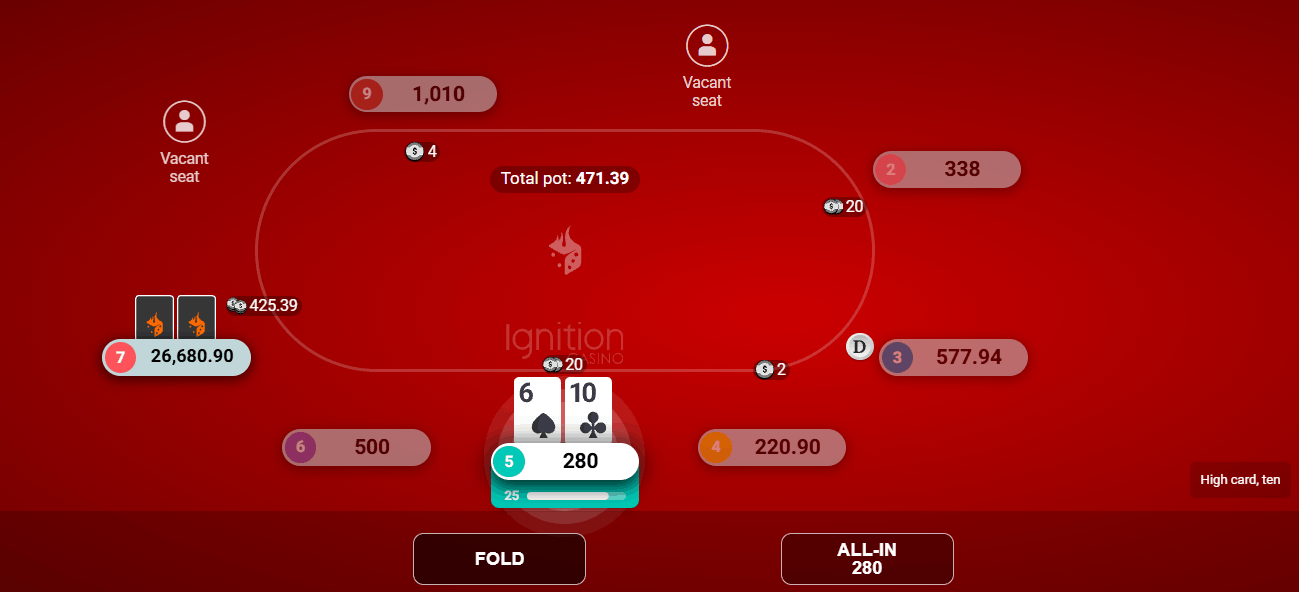
I’d consider 50+ big blinds a deep stack in a tournament, although you can still find yourself with 100+ BB in the early stages. With this many chips, you have plenty of room to play post-flop and don’t need to take big risks with marginal hands.
For example, if you have 80 BB, losing 10 or 15 BB in a pot doesn’t put you in immediate danger, so you can afford to play more speculative hands when the situation is right. You also have more room to pressure shorter stacks without risking too much.
Alex’s Tip: A deep stack gives you plenty of room to be aggressive, so use it to your advantage. As you can see in the screenshot, the deep stack at the table is using it to their advantage. Just don’t get carried away and start bleeding chips in pointless pots simply because you can afford to.
Medium Stack
A medium stack is roughly 25–50 big blinds. You still have enough chips to play normally, but you can’t afford to treat every hand like you have an endless supply of chips.
For example, with 35 BB, losing a large pot can leave you in a much weaker position, so you need to be more selective about which pots you get involved in. At the same time, you shouldn’t become too passive, as the blinds will continue to eat into your stack.
In my experience, this is the situation you’ll be in most often if you regularly play tournaments at top poker sites, so you should master playing a medium stack.
Short Stack
Once you’re down to around 10–25 big blinds, you’re a short stack, and your options start becoming more limited. You have less room to make moves after the flop, so pre-flop decisions and table position become much more important.
For example, with 15 BB, opening a hand and then folding to a raise is a big mistake. You should start looking for good opportunities to steal blinds, re-shove and double up rather than waiting indefinitely for premium hands.
Very Short Stack (Push-Fold Situation)
With 10 BB or less, you’re in what I’d consider the danger zone. At this point, you have a target on your back, and unfortunately, you don’t have many options. In fact, going all-in or folding will often be your best options.
For example, if you have 7 BB and find a reasonably strong hand in late position, an all-in is the best decision. Making a small raise and leaving yourself with very few chips behind is wrong, because you give other players the opportunity to get in cheap and get a better hand post-flop.
Reading Your Opponents and Adjusting Your Strategy
The cards you get dealt are important, but poker tournaments are more about how you play versus your opponents. Paying attention to how the other players at your table behave can give you a pretty good idea of when to apply pressure and when to stay out of their way.
I try to look for a few things throughout the tournament:
- Tight players: If someone is folding most hands and only getting involved with strong cards, don’t give them too much action when they suddenly show interest in a pot. On the other hand, you can often steal their blinds when they’re showing signs of playing too cautiously.
- Loose players: These players are happy to get involved with a wide range of hands. You don’t necessarily need to match their aggression. Instead, let them put chips into pots when you’re ahead, and steal them when the opportunity arises.
- Aggressive players: Some players will constantly raise, re-raise and put pressure on the table. Don’t automatically assume they’re holding a strong hand every time. Look for spots where you can call or re-raise them when you have a hand that can stand up to their range. Also, they’re very likely to eliminate themselves.
- Players protecting their stack: As you get closer to the money or a major payout jump, some players become noticeably more cautious. If you have a big stack, this can be a good opportunity to put pressure on them and pick up pots without needing a premium hand.
- Betting patterns: We all develop our own patterns at the poker table, often without even realising it. You might always bet a certain amount with strong hands, take a little longer to make certain decisions, or suddenly speed up when you’re bluffing. If you notice an opponent breaking their usual pattern, it can be a useful clue that something has changed.
- Players targeting you: If another player keeps raising your blinds or getting involved in pots against you, don’t let it turn into a personal battle. It’s all part of the game, so instead of tilting and taking it personally, you should just adjust your strategy based on their actual play rather than trying to win every pot against them.
Latest Articles


Gambling is intended only for adults aged 18 and over. AustralianStakes.com is committed to producing fair, independent content, and our editorial opinions are not shaped by casino operators, advertisers, or other outside parties.
Gambling should always be treated as entertainment and contained within sensible limits. Anyone concerned about their own gambling habits or those of a friend or family member can access confidential support through the following organisations:
- https://responsiblewagering.com.au/
- https://www.gamblinghelponline.org.au/
- https://gamblershelp.com.au/get-help/