


What is Volatility?
Volatility describes how a casino game’s payouts are distributed, including how frequently wins occur and how large they tend to be. It directly affects how a game pays, making it an important factor to consider when choosing what to play.
Low-volatility games generally deliver smaller wins more often, while high-volatility games tend to have longer dry spells but offer the potential for bigger payouts. Medium-volatility games fall somewhere in between.
You’ll often hear volatility described as a measure of risk, and that’s a useful way to think about it. However, it doesn’t mean a high-volatility game is necessarily worse or that a low-volatility game is safer in every aspect. All casino games involve risk, and no volatility level guarantees a win or tells you when the next payout will arrive.
It’s also important to distinguish volatility from house edge. Volatility describes the game’s expected short-term pattern, while the house edge shows the mathematical advantage the casino has over players in the long run.
In other words, a game’s volatility relates to how wins are spread out, not its profitability.
Note from Alex: A game can have high volatility and still have the same theoretical return as a lower-volatility game. The difference is in how those results play out, not necessarily how much the game returns over time.
RTP & Volatility
I mentioned house edge, so RTP is the other side of the same coin. It stands for Return to Player, and it’s a feature that much better indicates the profitability of a game in the long run.
This tells you how much of your wagers you should theoretically get back. For example, if you end up betting a total of A$100 on a pokie with an RTP of 97%, you could expect to win back A$97 over the long run.
This might sound predictable, but RTP doesn’t mean you’ll get back the same percentage of your wagers every time you play. It represents a theoretical average calculated over millions of spins, so your actual results can vary considerably in the short term.
You might finish a session ahead, lose your entire budget, or land somewhere in between. The house edge still applies over time, but it doesn’t mean that you can’t have a profitable session.
This is where volatility comes into play. While RTP tells you what a game is expected to return over the long run, volatility gives you a better idea of how those returns are distributed. Two pokies with the same RTP can feel completely different to play, with one delivering frequent small wins and the other offering fewer wins but the potential for much larger payouts.
Alex Notes: In my guide about house edge, I explain in detail how it works and its correlation with RTP.
Types of Volatility
Volatility doesn’t determine how profitable a game is, but it can help you choose one that better matches your playing style. Some players prefer frequent, smaller wins, while others are happy to wait longer for a chance at a much bigger payout. Volatility helps explain these differences.
Casino games are generally grouped into three categories: low, medium, and high volatility. Some games also fall somewhere in between, with labels such as medium-low or medium-high volatility. These simply indicate that a game leans toward one category while sharing some characteristics with the next.
Let’s look at each type in more detail, including how it affects the frequency and size of payouts.
Low Volatility
In low volatility games, winning hits tend to be more frequent, but the payouts tend to be on the lower end. Again, this doesn’t have anything to do with profitability, as you may land a lot more winning hits, but they will be small, rarely over 10x your wager.
Still, a lower volatility game makes for a steadier session and fewer dry streaks. These games are best if you want your bankroll to last longer, as you’ll get more frequent returns, though they will be smaller.
Lower volatility is good for longer sessions, controlling losses, and completing wagering requirements.
Medium Volatility
Medium volatility is an in-between option that still offers fairly frequent smaller wins but also occasional big payouts. This offers a balance between low- and high-volatility games and suits players who prefer variety and aren’t focused on either extreme.
Medium volatility games combine both styles and can offer the satisfaction of an occasional bigger win without having to sit through as long of a dry spell as you would when playing a high volatility game.
High Volatility
High volatility games have way less frequent wins, but much higher individual payouts. This type of game does require some patience as you’re likely to experience fewer payouts and might go through a series of losses before you land a big hit.
High volatility games can, therefore, be discouraging in the short term, but much more entertaining when you get to a large payout. Ultimately, it depends on play style, as volatility has no impact on profitability or RTP.
How to Identify Volatility
You can sometimes get a feel for a game’s volatility by playing it, but short-term results are not a reliable way of finding out the volatility of a specific game. A few hundred spins on a pokie might give you an idea of how frequently it pays out, but that’s not enough to determine its volatility.
For example, you could experience a long losing streak on a low-volatility game or land a few wins on a high-volatility one.
The most reliable way to know a game’s volatility before playing is to check the information provided by the developer. Most of the games you’ll find at top online casinos are labelled as low, medium, or high, and you can usually find the volatility info in the help section or game information panel.
However, this doesn’t work the same way for every casino game. You generally won’t find a fixed volatility rating for games like roulette or blackjack because their volatility depends largely on the bets you make.
In roulette, for example, betting on a single number is a much more volatile bet than betting on red or black. Blackjack volatility also varies depending on your betting approach and the decisions you make during a hand, and I explain this in more detail in my blackjack guide as well as my roulette guide.
Volatility by Game Types: Pokies, Poker & More
Volatility works differently across different casino games, depending on their rules, payouts, and betting options. Here’s how it varies between popular game types, from pokies and poker to roulette, blackjack, and live casino games.
Pokies

Pokies come in many different volatility settings, including low, low-to-mid, medium, mid-to-high, or high volatility. Low-volatility pokies tend to deliver smaller wins more frequently, while high-volatility games usually have longer dry spells but offer the potential for bigger payouts.
Medium-volatility pokies are in the middle, but you’ll only notice the volatility of a pokie after many spins.
Some pokies let you pick what variance you want. The software provider Wazdan, for example, offers a Volatility Levels button on many of its pokies, like 9 Coins, that lets you adjust the game profile to your liking.
Other providers also sometimes allow for volatility choice in certain games, though to a lesser degree. Examples include Pragmatic Play’s Zeus vs Hades – Gods of War and Microgaming’s Game of Thrones, but if you’re looking for the hottest pokies, I suggest you check out my top pokies list.
Poker
Poker volatility depends on the type of game you’re playing. In player-versus-player (PvP) poker, results depend on factors such as your opponents’ skill, your decisions, the stakes, and the cards you’re dealt. Since you’re competing against other players rather than the house, volatility doesn’t have a fixed rating like it does in other casino games.
Video poker is different because it follows fixed mathematical rules and paytables, making its volatility easier to assess. Jacks or Bette, for example, is generally considered lower-volatility because it offers more frequent payouts, while Double Double Bonus is more volatile because it relies on rare hands for its biggest wins.
The selection of good PVP poker sites in Australia is rather limited, though. Only a few sites offer a great poker experience.
Baccarat
Baccarat is one of the steadiest casino games, where bets are either very low-risk or high-risk. For example, the player and banker bets usually offer steady returns with a 1:1 payback (the banker bet may take a commission but has a lower house edge).
Meanwhile, the tie bet is pretty risky and has a much larger house edge (14.36%) but pays back 8:1 or 9:1. Modern game variants with multipliers and side bets can add massive variation to baccarat, but the traditional game remains low-volatility and fairly steady.
Roulette
Roulette bets are a great example of the two extremes of volatility and everything in between – inside bets are high to ultra-high volatility, while outside bets are low volatility. It’s important to consider your bank balance and how much you can stretch it comfortably when deciding what to wager on. These are the payout rates and volatility for outside bets in a standard roulette game:
| Outside bets | ||
|---|---|---|
| Type | Payout | Volatility |
| Red or black | 1:1 | Low |
| Odd or even | 1:1 | Low |
| High or low | 1:1 | Low |
| Column | 2:1 | Medium-low |
| Dozens | 2:1 | Medium-low |
If you’re more into high-risk, high-reward gaming, inside bets provide higher maximum payouts, but the volatility is much higher as well:
| Inside bets | ||
|---|---|---|
| Type | Payout | Volatility |
| Straight-up | 35:1 | Very high |
| Split | 17:1 | Very high |
| Street | 11:1 | High |
| Corner | 8:1 | Medium-high |
| Basket | 6:1 | Medium |
| Six line | 5:1 | Medium |
Blackjack
Blackjack is generally a low-volatility casino game, especially when you stick to standard bets and use basic strategy. Its RTP can reach around 99.5% under favourable rules and when using basic strategy, so it’s been the go-to casino game for many.
However, side bets such as 21+3 and Perfect Pairs can significantly increase volatility. These wagers offer larger payouts for less common outcomes, but they also tend to come with a higher house edge than the main blackjack bet.
Live Games
The term Live Games is a broad term for games with a live dealer or host, including classics like blackjack and roulette, as well as other games like popular game shows.
One such example is Money Time by Pragmatic Play Live, which has specific rules and features that make it very hard to measure the exact volatility, but ultimately, it depends on the bets you make.
Crash Games
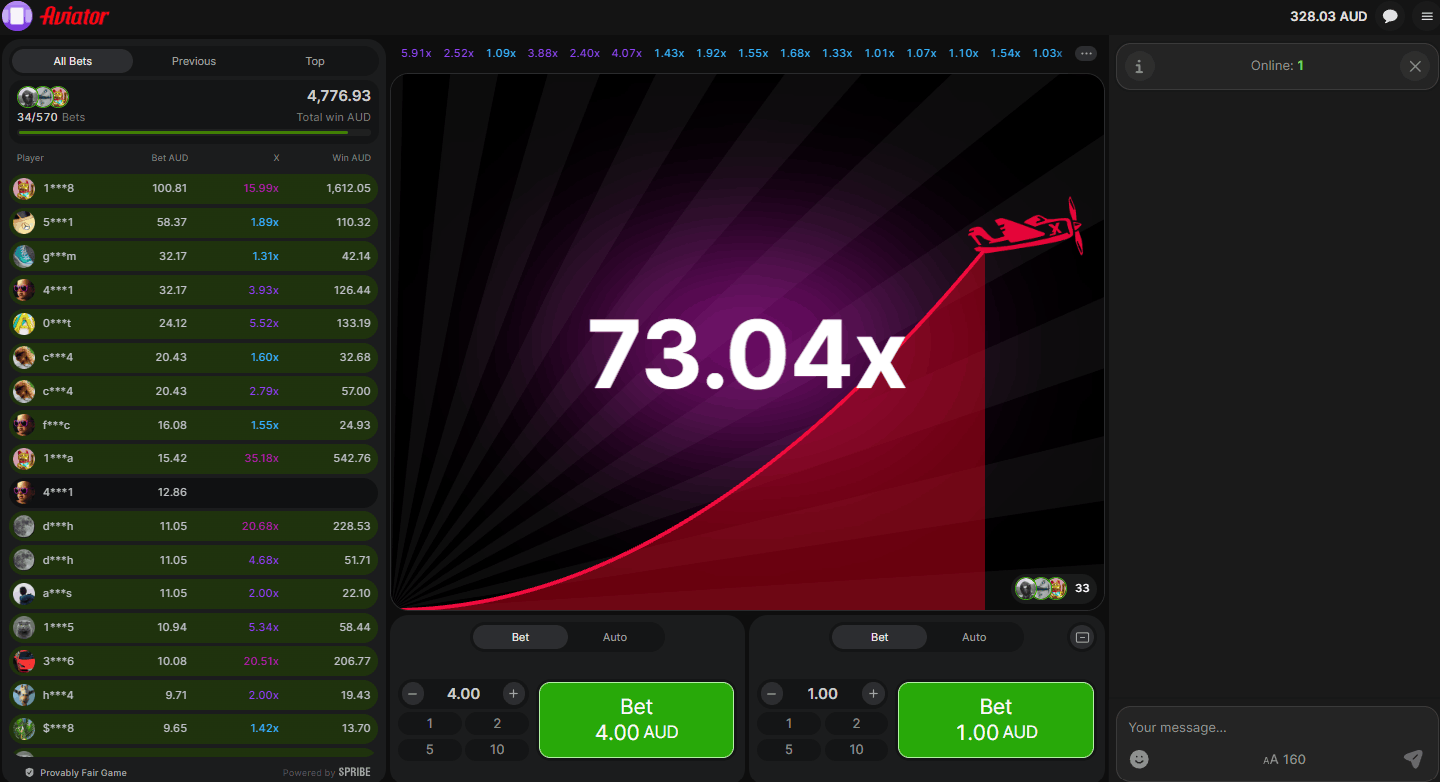
Unlike other types of games, crash games feature dynamic volatility that depends on players’ real-time decisions. When you choose to cash out determines the variance in payout:
- Low: An early cash out means lower volatility and less risk, with smaller but more secure payouts.
- Medium: Cashing out at a slightly higher multiplier like 2x-5x offers balanced play with slightly larger payouts and a decent degree of risk management.
- High: Holding out for huge multipliers makes the game extremely volatile and risky, with long losing streaks but occasional massive spikes.
What to Go For?
What type of game you opt for is ultimately down to personal preference. If you know what you’re looking for, this guide should have provided you with info on what works best with your play style.
On the other hand, if you’re less experienced with online gaming and aren’t sure what you’d prefer, I’d suggest trying demo versions of different games to see for yourself.
Remember that RTP determines the theoretical profitability in the long run, but volatility is an important factor too because it determines the rate at which payouts will occur.
Ultimately, there is no right or wrong answer when choosing a volatility type, and it’s all about what you find more entertaining.
Key Takeaways
- Volatility, or variance, describes the distribution and size of wins you can expect.
- Low-volatility means more frequent smaller payouts and a steadier session.
- Two games can have the same RTP but different volatility.
- Providers may list a game’s volatility in the info panel.
- Volatility in any game also matters for bankroll management.
- Try demo versions to get the feel of a game before betting real money.
- High-volatility means longer dry spells and less frequent wins, but potentially larger payouts.
- Volatility does not impact RTP, and no type of volatility is “more profitable”.
Latest Articles


Gambling is intended only for adults aged 18 and over. AustralianStakes.com is committed to producing fair, independent content, and our editorial opinions are not shaped by casino operators, advertisers, or other outside parties.
Gambling should always be treated as entertainment and contained within sensible limits. Anyone concerned about their own gambling habits or those of a friend or family member can access confidential support through the following organisations:
- https://responsiblewagering.com.au/
- https://www.gamblinghelponline.org.au/
- https://gamblershelp.com.au/get-help/