



The good news is that blackjack is not that hard to learn. In fact, there’s already a mathematically proven basic strategy that tells you the best possible decision for every hand. You don’t need to guess or invent your own system – you simply need to learn and follow the strategy.
In this guide, I’ll explain everything you need to know about blackjack, from the rules and card values to betting, basic strategy, common mistakes, and advanced tips.
How Is Blackjack Different from Other Casino Games?
Most casino games are almost entirely based on luck. You place your bet, spin the reels or the wheel, and hope for the best. Aside from deciding how much to wager, you have very little control over the outcome. Blackjack is different.
Every hand presents a decision that can affect your chances of winning. Should you hit, stand, double down, or split? Obviously, even making the correct choice won’t guarantee a win, but it will reduce the casino’s edge over the long run.
Unlike poker, in blackjack, you’re not playing against other players. You’re playing against the dealer, and the only hand that matters is yours versus theirs.
What really sets blackjack apart from almost all casino games is its low house edge. This is actually the game with the lowest house edge in a casino, with the exception of some video poker variants and some baccarat and craps bets.
When you follow basic strategy, the house edge can fall below 1%, which is exceptionally low. The table you choose can make all the difference, though, which is why I always recommend sticking to the best blackjack sites that feature favourable rules and a good selection of tables.
Different Types of Blackjack
Unlike many other casino games, most blackjack variants are more similar than they are different. The objective is usually the same – to reach 21 before the dealer. What does change are the rules, and those small differences can have a surprisingly big impact on both the house edge and the correct basic strategy.
That’s why I always recommend checking the table rules before you start playing. Something as simple as whether the dealer hits or stands on a soft 17, whether surrender is available, or how many decks are in use can affect your odds over the long run.
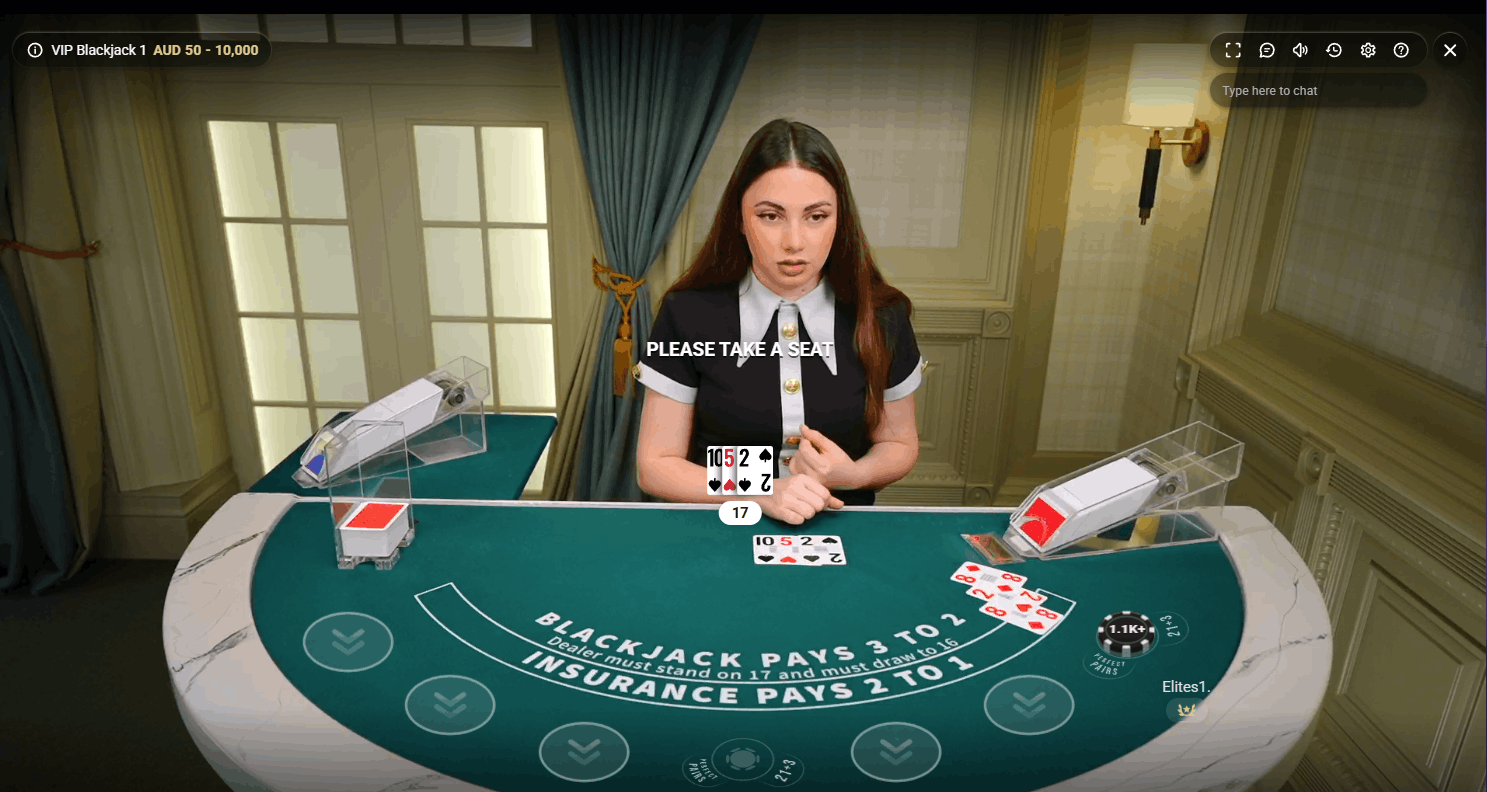
This is the standard version of the game and the best place for beginners to start. Most casinos offer multiple Classic Blackjack tables, and the basic strategy you’ll learn in this guide is based on this version.
Just make sure to read the rules and ensure they are player-friendly. It can be played in a land-based casino, as a live dealer game, or as an RNG blackjack game.
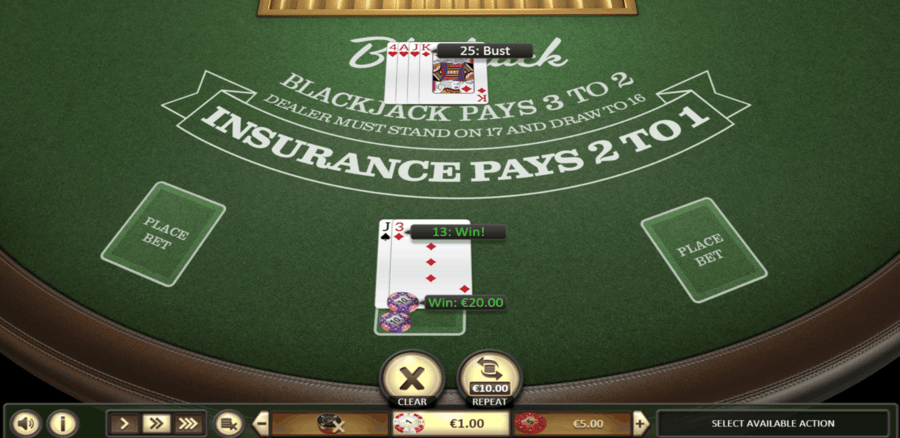
European Blackjack follows almost the same rules as the classic game, with one important difference. The dealer only receives one card initially and draws the second card after all players have completed their hands. This slightly changes the optimal strategy in certain situations.

Live Dealer Blackjack is an online blackjack game that’s streamed from a real casino studio and played with a professional dealer. The rules are usually based on one of the classic variants, but the experience feels much closer to playing in a land-based casino.
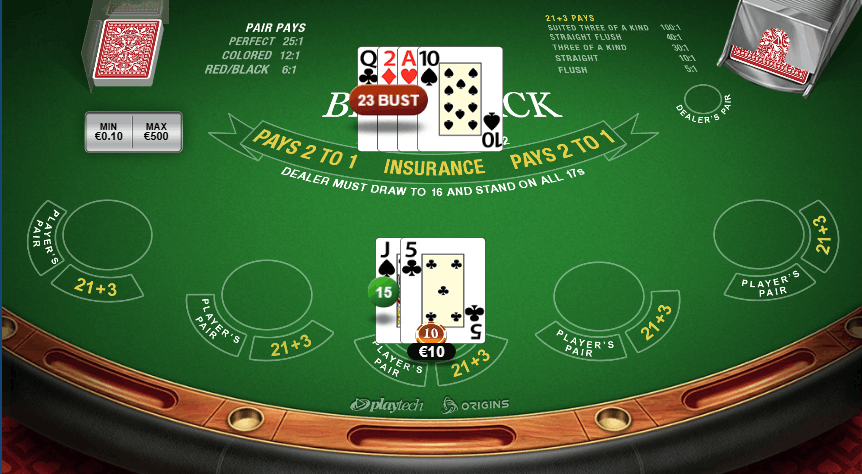
RNG Blackjack uses a Random Number Generator to shuffle and deal the cards digitally. It’s played as a video game, which means that it’s you versus the computer. You control the pace of the game, which means that hands can be completed in seconds, and you can usually find lower minimum bets.
If you’re practising basic strategy or simply want to play at your own pace, RNG Blackjack is an excellent choice. It’s often available in demo mode too, so you can try it for free.
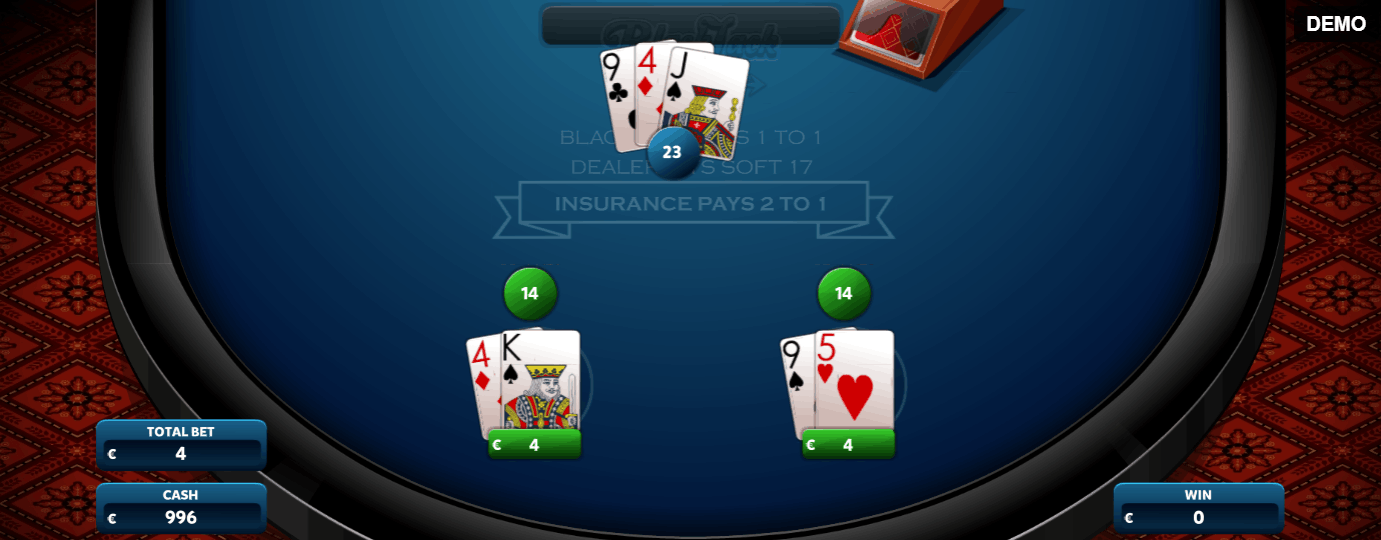
This one is usually available as an RNG online blackjack game. Instead of playing one hand, you play two at the same time and can swap the second card between them. This is a unique blackjack variant that gives you more flexibility, but the rules are adjusted to maintain the casino’s edge, making it a more strategic variation.
Las Vegas Blackjack has long been regarded as one of the best versions of the game, but now I actually consider it the worst version of blackjack. You see, many casinos on the Las Vegas Strip now use less player-friendly rules.
One of the most common is requiring the dealer to hit on a soft 17 (H17) instead of standing, which slightly increases the house edge. So, if you see a blackjack game with Las Vegas in the name (or similar, like Macao Blackjack), always check the table rules rather than assuming that it offers better odds.
This isn’t really a different game, but it’s a rule variation you’ll come across both online and in land-based casinos. Instead of paying 3:2 for a natural blackjack, it pays only 6:5, significantly increasing the house edge. Whenever possible, choose a 3:2 blackjack table and avoid 6:5 blackjack.
Blackjack Card Values & Rules
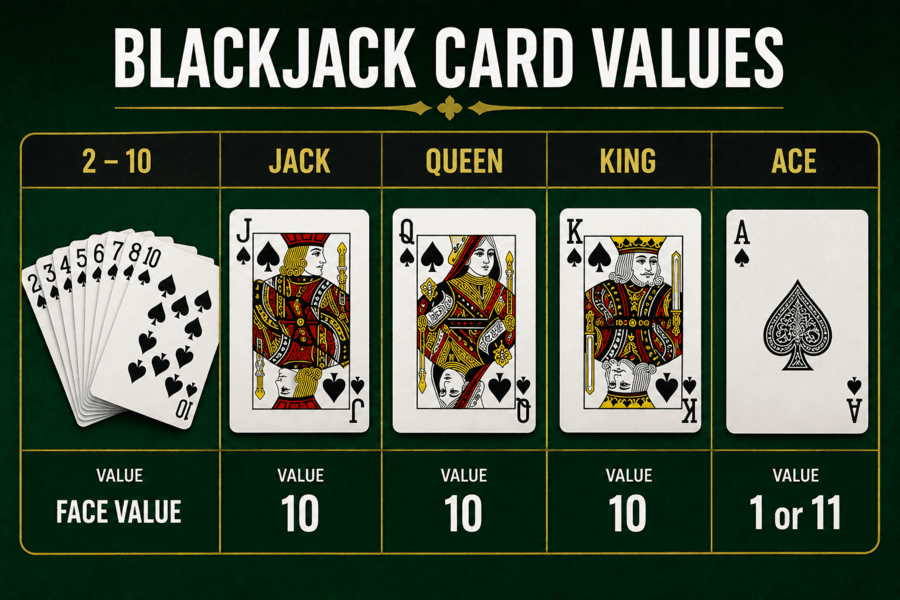
Before you can learn blackjack strategy, you need to understand how cards are scored. Fortunately, blackjack’s rules are very straightforward, and every card has a fixed value (except the Ace, which can be worth either 1 or 11).
Your goal is to build a hand worth as close to 21 as possible without going over.
| Card | Value |
|---|---|
| 2-10 | Face value |
| Jack | 10 |
| Queen | 10 |
| King | 10 |
| Ace | 1 or 11 |
What Is a Blackjack?
A blackjack, also known as a natural, is the best possible hand you can be dealt. It consists of an Ace and any 10-value card (10, Jack, Queen, or King), giving you a total of 21 with just two cards.
At most tables, a blackjack pays 3:2, meaning a A$10 bet returns A$25 (A$15 in winnings plus your original stake). It also beats any other hand worth 21 that was made using three or more cards.
Alex Wants You To Know: Remember how I mentioned that some blackjack games pay 6:5 instead of 3:2? This is exactly where that rule comes into play. A A$10 blackjack on a 6:5 table pays just A$12. That might sound like a minor change, but it’s not. This rule alone increases the house edge by about 1.39%, making it one of the worst rule changes you can encounter in blackjack.
Hard Hands
A hard hand is any hand that either doesn’t contain an Ace or contains an Ace that can only be counted as 1 to avoid busting.
Examples include:
- 10 + 6 = Hard 16
- 9 + 7 = Hard 16
- A + 5 + 10 = Hard 16
Hard hands are generally more difficult to play because there’s a greater risk of going over 21 when you take another card, and as you’ll see in the basic strategy cheat sheet, they usually require you to stand.
Soft Hands
A soft hand contains an Ace that’s currently being counted as 11. This gives you much more flexibility because if taking another card would push you over 21, the Ace simply changes to a value of 1.
Examples include:
- A + 6 = Soft 17
- A + 7 = Soft 18
- A + 2 + 5 = Soft 18
Since you can’t bust by drawing a single card on a soft hand, the basic strategy is often much more aggressive with a soft hand.
Busting
If your hand exceeds 21, you bust and automatically lose the hand, even if the dealer also goes over 21 later. That’s why the most important decision in blackjack is when to stand and when to hit.
Taking another card might improve your total, but it could also push you over 21. Standing keeps your current hand, but it may not be strong enough to beat the dealer. Finding the right balance is exactly what basic strategy is designed to do.
The Dealer's Upcard
At the start of each hand, the dealer receives two cards, but only one is dealt face up. This visible card is known as the dealer’s upcard, and it’s one of the biggest factors in every decision you make.
Basic strategy isn’t based only on your own hand. It’s based on the combination of your total and the dealer’s upcard. For example, you might stand on a hard 16 against a dealer showing a 6, but hit the same hand against a dealer showing a 10.
Splitting
If your first two cards are the same value, you may have the option to split them into two separate hands by placing a second bet equal to your original wager. The splitting rules are different in each blackjack game, but if you have the split option and you opt to do it, each hand is then played independently, giving you two chances to beat the dealer.
Splitting can be very profitable in the right situations, but it’s not always the correct play. I’ll cover when you should and shouldn’t split later in this guide.
Doubling Down
Doubling down allows you to double your original bet after receiving your first two cards. In return, you’ll receive one final card, and your hand automatically stands. It can be a useful move when the odds are in your favour, which is why basic strategy recommends doubling down only on specific hands against certain dealer upcards.
How to Play Blackjack: Step by Step
Now that you understand the basics, it’s time to see how a typical hand of blackjack unfolds. Every hand follows the same steps, regardless of whether you’re playing RNG, live dealer online blackjack, or in a land-based casino. Here’s how blackjack is played:
1
Place Your Bet:
Choose your stake and place your chips in the betting circle before any cards are dealt.
2
The Cards Are Dealt:
You receive two face-up cards, while the dealer receives one face-up card (the upcard) and one face-down card (the hole card).
3
Check Your Hand:
Add up the value of your cards. If you’re dealt an Ace and any 10-value card, you have a blackjack, which usually wins immediately unless the dealer also has blackjack.
4
Decide Your Next Move:
Based on your total and the dealer’s upcard, you’ll choose one of the available actions:
-
- Hit to receive another card.
- Stand to keep your current total.
- Double Down to double your bet and receive one final card.
- Split if you’re dealt a pair and want to play two separate hands.
5
The Dealer Plays Their Hand:
Once all players have finished, the dealer reveals their hole card. Unlike players, the dealer has no decisions to make and must follow fixed rules, usually hitting until at least 17.
6
Determine the Winner:
If the dealer busts, all remaining players win. If neither side busts, the hand closest to 21 wins. If both totals are the same, the result is a push, and your original bet is returned.
Basic Blackjack Strategy
Unlike many casino games, blackjack has already been solved mathematically. For every possible hand, there’s a decision that gives you the highest expected return over the long run. This is known as basic strategy, and it’s the foundation for becoming better at blackjack.
You don’t need to memorise it overnight. With a little practice, making the correct play will become second nature.
When to Hit
Hitting means taking another card to improve your hand. You’ll usually hit whenever your total isn’t strong enough to beat the dealer or when the dealer is showing a strong upcard. While taking another card always carries the risk of busting, standing on a weak hand often gives the dealer an easy win.
This is when you should hit, according to the strategy:
- Always hit on hard 11 or lower.
- Hit on hard 12 against a dealer showing 2, 3, or 7 through Ace.
- Hit on hard 13 to 16 against a dealer showing 7 through Ace.
- Hit on soft 17 or lower.
- Hit on soft 18 against a dealer showing 9, 10, or Ace.
When to Stand
Standing means keeping your current hand and ending your turn. You’ll usually stand whenever taking another card is more likely to make you bust than improve your chances of winning. The dealer must follow strict rules, so sometimes the best strategy is to let them take the risk instead.
This is when you should stand:
- Always stand on hard 17 or higher.
- Stand on hard 13 to 16 against a dealer showing 2 through 6.
- Stand on hard 12 against a dealer showing 4 through 6.
- Stand on soft 19 or higher.
When to Double Down
Doubling down allows you to double your original bet and receive one final card. The strategy suggests you only use it when the odds are clearly in your favour. In other words, you should use it when you’re likely to finish with a strong hand while the dealer is in a weaker position.
This is when to double down, according to the basic strategy:
- Double on hard 11.
- Double on hard 10 against a dealer showing 2 through 9.
- Double on hard 9 against a dealer showing 3 through 6.
When to Split
Splitting turns one pair into two separate hands, so it can be more profitable to play two hands instead of one. While some pairs should almost always be split, others should never be split. Remember, never-ever split 10s, Jacks, Queens, or Kings.
As a general rule:
- Always split Aces.
- Always split 8s.
- Never split 5s.
- Never split 10s, Js, Qs, and Ks
- Split 2s, 3s, 6s, 7s, and 9s only against specific dealer upcards, which you can find in our blackjack chart guide.
Blackjack Tips: How To Get The Highest Odds & House Edge
One of the biggest reasons blackjack has remained popular for centuries is its exceptionally low house edge.
Unlike pokies or roulette, where the casino’s advantage is fixed, your decisions in blackjack directly influence your chances of winning. By following basic strategy, you can reduce the house edge to as little as ~0.5%, giving the game an RTP of up to ~99.5% under favourable rules.
That said, you can only get this rather high RTP if the rules allow it. Small rule changes can have a surprisingly big impact on your long-term results, which is why I always recommend checking the table rules before you start playing.
These are the rules you should check before playing a blackjack game:
- 3:2 vs 6:5: Always choose 3:2 blackjack if possible. A 6:5 payout increases the house edge significantly.
- The Number of Decks: Fewer decks generally mean better odds for players, although other rules matter too.
- Dealer Stands on Soft 17 (S17): Better for players.
- Dealer Hits on a Soft 17 (H17): Slightly increases the casino’s advantage.
- Late Surrender: It’s a player-friendly rule that lets you forfeit your hand and recover half your bet in certain situations.
Blackjack Side Bets: Are They Worth It?
Many blackjack tables include optional side bets that offer the chance to win large payouts (like 5:1, 10:1, or larger). Admittedly, they can make the game more entertaining, but they almost always come with a much higher house edge than the main blackjack game, so I don’t recommend using them.
Some of the most common side bets include:
- Perfect Pairs: Pays if your first two cards form a pair, with larger payouts for coloured or identical pairs.
- 21+3: Combines your first two cards with the dealer’s upcard to create poker hands such as flushes, straights, and three of a kind.
- Lucky Lucky: Pays based on the total of your first two cards and the dealer’s upcard, with bonuses for totals like 19, 20, or 21 and certain card combinations.
Alex’s Advice: If you’re serious about getting the most out of your bankroll, pretend the side bets don’t exist. On the other hand, if you’re looking for the fastest way to drain your bankroll, side bets are a great place to start. My advice is to avoid them completely.
5 Things That Will Make You a Better Blackjack Player
Blackjack isn’t a difficult game to learn, but it does reward disciplined players. Before I wrap up, here are five final tips I’d like to leave you with:
1
Learn the basics:
The basic blackjack strategy is your biggest advantage. The sooner you start using it, the better.
2
Don't guess:
Blackjack is a game of maths, not instinct. Every hand has a statistically correct play, and it’s your best chance of long-term success.
3
Ignore gambling fallacies:
The dealer doesn’t “always have 20,” you’re not “due” for a win, and hot or cold streaks don’t exist. Don’t let myths and gambling fallacies influence your decisions.
4
Think long term:
Even the best blackjack players lose plenty of hands. The goal is to make the right decisions over hundreds of sessions, not one lucky night.
5
Play responsibly:
Set a budget, know when to walk away, and remember that good bankroll management is just as important as good strategy.
Latest Articles


Gambling is intended only for adults aged 18 and over. AustralianStakes.com is committed to producing fair, independent content, and our editorial opinions are not shaped by casino operators, advertisers, or other outside parties.
Gambling should always be treated as entertainment and contained within sensible limits. Anyone concerned about their own gambling habits or those of a friend or family member can access confidential support through the following organisations:
- https://responsiblewagering.com.au/
- https://www.gamblinghelponline.org.au/
- https://gamblershelp.com.au/get-help/